
Creativity, Activity, Service (CAS)
CAS at Waterford Kamhlaba UWCSA brings together the UWC Mission, the Waterford Kamhlaba mission, the Cambridge International Education mission, and the International Baccalaureate learner profile.
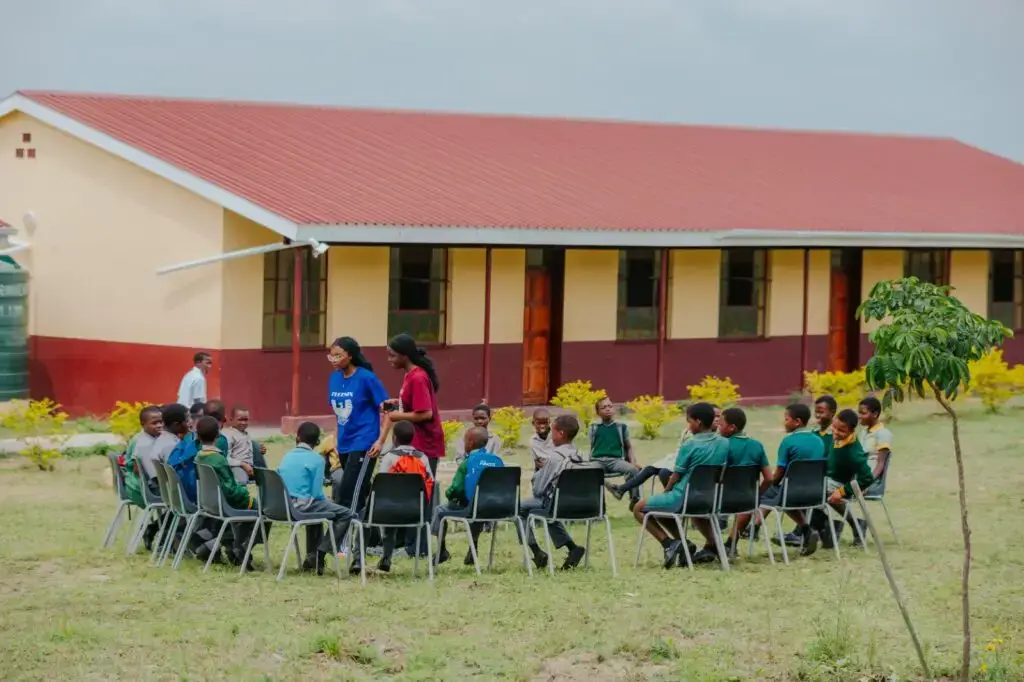
It offers all students, from Form 1 to IB2, structured and transformative opportunities for personal growth and development. Through CAS, students build self-determination and self-awareness. They engage with local and global issues. They apply innovative problem-solving skills. They collaborate and exchange ideas with diverse people and communities within Waterford and across the Kingdom of Eswatini.
CAS provides students with an opportunity to take part in a range of experiences that involve:
- responsible citizenry
- real, purposeful activities, leading to leadership and personal development
- positive challenge
- planning, budgeting, project management, reflection and reporting
- reflection on outcomes and personal learning
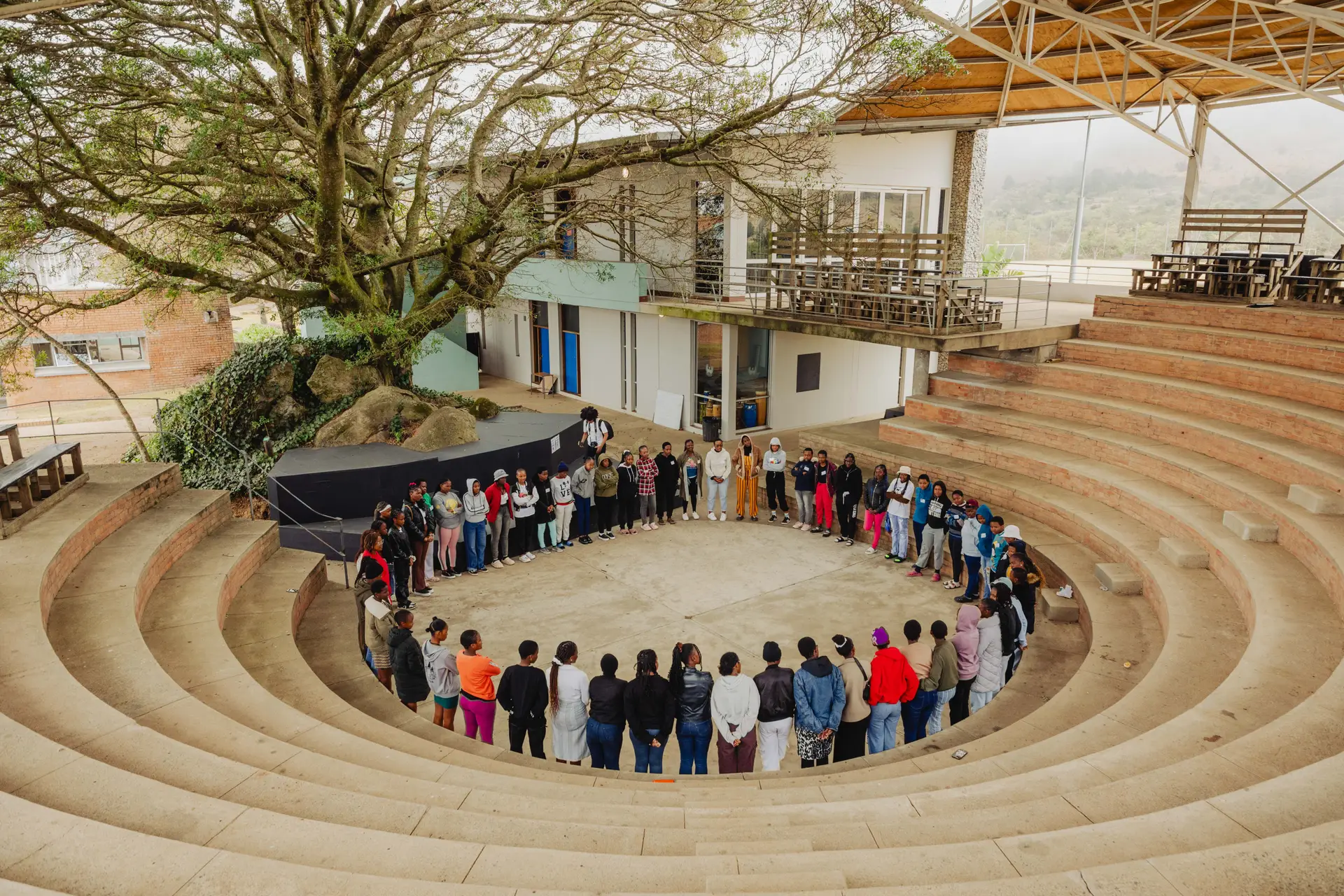
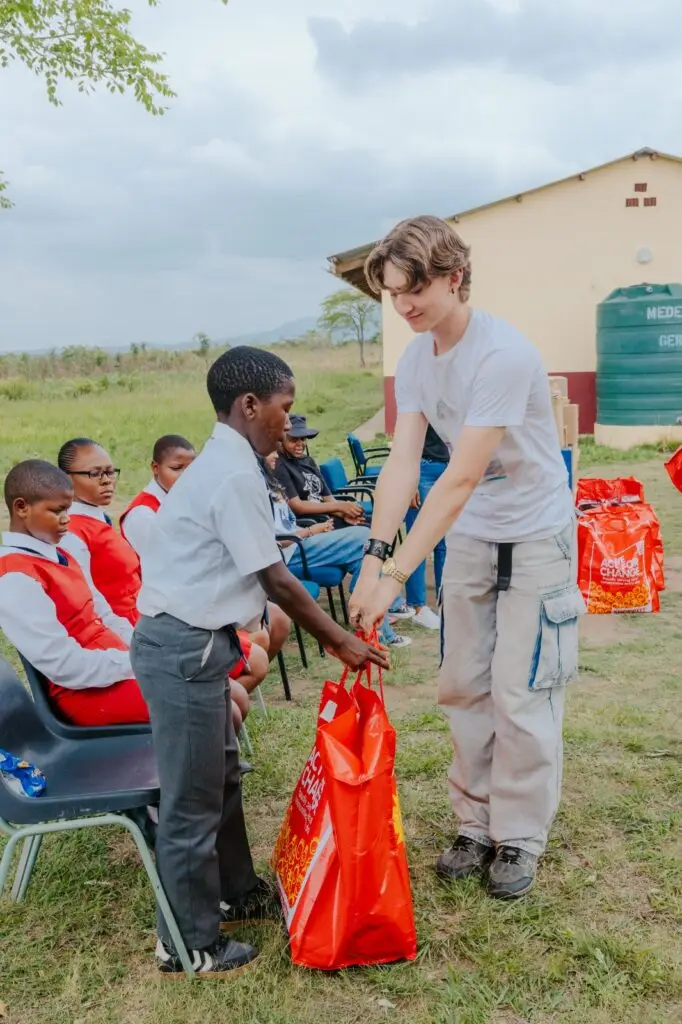
Lower Forms
- Introduction to Waterford Kamhlaba and the UWC Movement
- Introduction to Service
- Ethics in Service
- Introduction to Justice
- Introduction to Sustainability and the Environment
- The Circular Economy
Senior Forms
Outdoor Education gives our students the chance to:
● Step beyond their comfort zones.
● Discover hidden strengths.
● Build friendships that last a lifetime.
● Reflect on themselves, others, and the world. At Waterford, Outdoor Education is not just about adventure. It is a transformative educational journey, one that shapes character, deepens learning, and creates memories that last a lifetime.
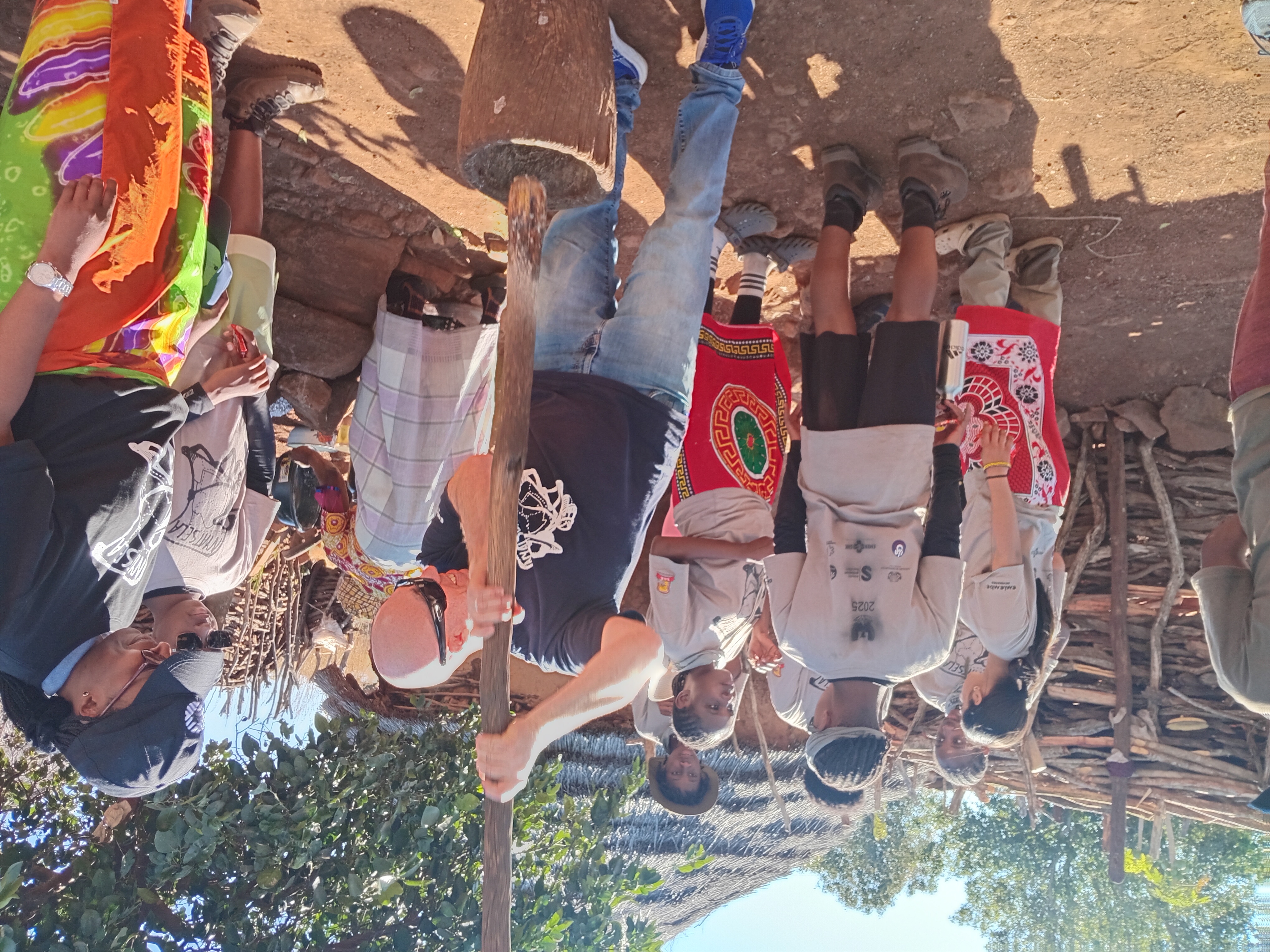
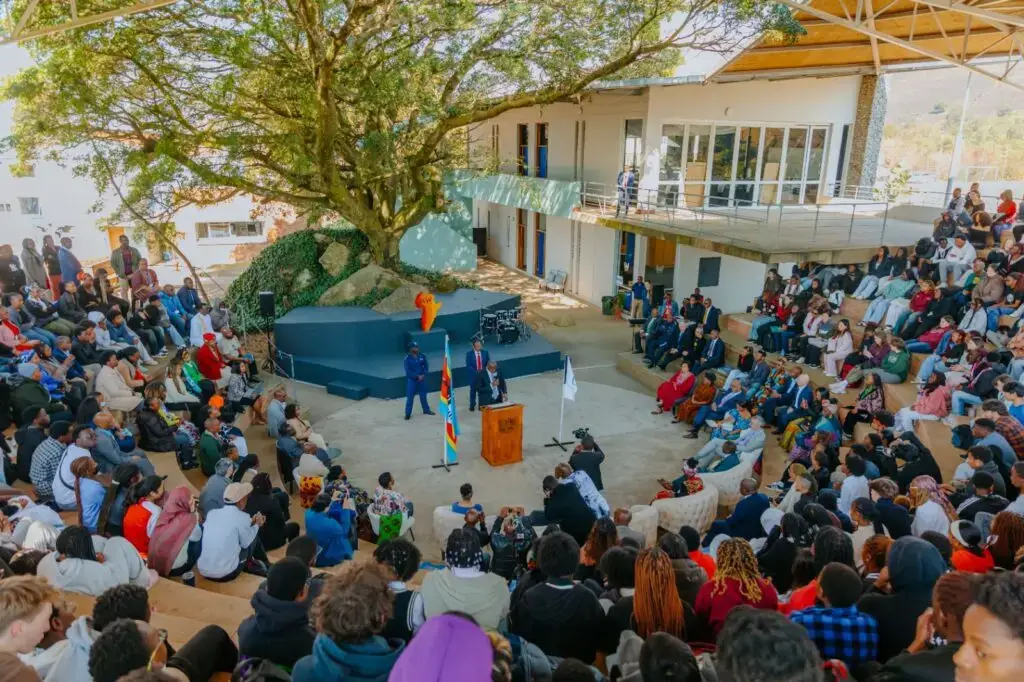
Brave Girl Camp
Brave Girl is a week-long empowerment camp for 50 female high school students in Eswatini, which is held on the Waterford Kamhlaba campus. During Brave Girl, campers engage in discussions surrounding girls empowerment, with a focus on education, career planning, financial literacy, as well sexual reproductive health (SRH), mental health and wellness, sports and the arts, developing sisterhood relationships, self defence and many others. The camp also includes a Work Experience Day, where the girls are attached to local businesses and organisations to learn about their careers of interest for the day. It culminates with a graduation ceremony with the girls, their families and schools.
MUN Conference
Model United Nations, also known as Model UN or MUN is an extra-curricular activity in which students typically roleplay delegates to the United Nations and simulate UN committees. During their meeting sessions students who are members of the MUN club work with their student coordinator and the guidance of their teacher coordinators to prepare and plan for the WK MUN conference for schools in Eswatini and the region.
Annual Careers Fair
The Annual Careers Fair is a student-led Career Support Initiative (CSI) event and it is a
community service project, organised by IB2 students. The event brings together high school students from around eSwatini to get career information from a number of companies and organisations. It has grown in size over the years and now over 2000 high school students participate in the event, in which many companies come to exhibit.
24 Hour Run
The 24 Hour Run is one of the school’s charity events which takes place every second year. Everyone including students, alumni, staff and parents are invited to take part in this event, as long as they join a team. Participants complete laps around the field within a space of 24 hours, and each lap is sponsored. They then collect money from sponsors who agreed to sponsor their participation for each lap they completed. The money raised from the event is used to fund the school’s various community service projects
YWEC
The Waterford Kamhlaba UWCSA Young Women’s Empowerment Consortium (YWEC) is a student-led initiative launched in 2024 with the support of the Global Fund for Women. YWEC consolidates and catalyzes various activities in the Waterford Kamhlaba community, that are interested in the advancement of young women in Eswatini, towards justice in inclusivity, equity and impact. The beneficiaries for YWEC are women and girls from Eswatini who are change agents in their communities.
YWEC’s goals are encapsulated in our motto, “Beyond Limits, Beyond Labels”, emphasising our commitment to breaking down barriers and challenging stereotypes. The overall aim is to develop a network of powerful, influential young women across Eswatini.
With its holistic approach, CAS is designed to strengthen and extend students’ personal and interpersonal learning, through activities that are creative, active or promote serving your community. Successful completion of CAS is a requirement for the award of the IB Diploma. Students reflect on their CAS experiences and provide evidence in their CAS portfolios of achieving the seven learning outcomes, which are assessed by the CAS Coordinator for achievement of their IBDP requirements.
CAS Projects
A CAS project is a student designed and student led activity exploring SERVICE in depth in an area of interest of the members of the project, e.g. wellness, social justice, sustainability, art, media and others. CAS projects must be collaborative, enabling students to show initiative, demonstrate perseverance, and develop skills such as those of cooperation, problem-solving and decision-making. All IBDP students complete a CAS project in their first year of the program as a requirement for fulfilling IBDP completion.
CAS Co-Curricular Opportunities
Students are strongly encouraged in implementing projects outside of the CAS curriculum, especially through official and funded programs. Here are the programs WK currently participates in annually:
EARTH PRIZE
The Earth Prize is an annual, global environmental sustainability competition for students between the ages of 13 and 19, which rewards the team whose projects have the most potential to address environmental issues. The Earth Prize will recognize the students and schools with the best solutions to accelerate positive change towards environmental sustainability, as judged by The Earth Prize Adjudicating Panel.
Submissions to The Earth Prize are expected to propose solutions aimed at accelerating positive change towards environmental sustainability. The Earth Prize will consider a wide range of projects: local, national and global in scope; new ideas and existing student projects; in the form of organisations, enterprises and campaigns.
The winning team will receive a prize of $100,000, to be split in half between the team and their school: Fifty percent (50% or USD 50,000) of the prize will be awarded to the team’s school to be used in a project focusing on environmental sustainability, and fifty percent (50% or USD 50,000) as an educational scholarship grant to be split evenly amongst the team members. In addition, three runner-up schools will be awarded $25,000 each.
Submissions to The Earth Prize are expected to propose solutions called “Fresh Ideas” aimed at accelerating positive change towards environmental sustainability. The Earth Prize will consider a wide range of solutions: local, national as well as global ones; new ideas with implementation potential as well as existing student projects; products, organisations, enterprises, as well as campaigns.
YOUNG AURORA
Young Aurora’s mission is to encourage, support, and showcase student-driven projects which address humanitarian issues and offer solutions through innovative and sustainable approaches.
Young Aurora aims to encourage students to engage with humanitarian issues affecting their school community in an economically, socially and environmentally sustainable way. Through a friendly and rigorous competition, Young Aurora recognises projects designed to have meaningful impact.
Three student project teams are nominated annually to present their projects to a panel of esteemed judges including entrepreneurs, philanthropists and world leaders. In previous years, this event has been held in Armenia, but since 2020 it has been held online as part of the Aurora Dialogues Online. The winning team is provided with a USD 4,000 grant to further their project’s development.
Projects must address a concrete humanitarian concern identified by the project team which is relevant to Waterford Kamhlaba’s geographic location in Eswatini, i.e. the concern must have an impact on the communities or environments in the geographical vicinity of the project team’s school. Examples of humanitarian concerns may include, the refugee crisis, child homelessness, human trafficking, women’s health, etc.
The activities or actions proposed as part of the project should address the identified humanitarian concern and propose concrete steps to reduce or eliminate it from the community in concern. Projects must be student-initiated and student-led. They might consist of a completely new project, or be part of an already existing initiative at Waterford Kamhlaba (such as a CAS activity), provided that the existing initiative is also student-led.
Each team submitting a project must consist of at least four students, some of whom must be IB students. Students in the forms are welcome to be part of the team. The team members who will present the project to the final jury (if chosen as a finalist team) must still be current students. Finally, each team must contain one staff member.
GLOBAL YOUTH ACTION FUND
The Global Youth Action Fund platform and grant seeks to identify and recognize motivated students between the ages of 12 and 19 who demonstrate the skills needed to become the socially conscious leaders, innovators, entrepreneurs the world needs today. The platform will support students to create, innovate or expand on an impactful project of their own design.
The Global Youth Action Fund seeks to award a grant of no more than USD 3,000 per project, for up to 150 student initiatives focusing on social impact and innovation. Each project must be aimed to support one of the 17 UN Sustainable Development Goals (SDGs).
It will encourage projects that allow for additional students from their school community to take on leadership roles and demonstrate potential for the idea to continue to grow and make an impact in their community.
Finalists will become part of an annual peer-to-peer network of diverse students, receive a grant to support their project, and each finalist will be paired with a mentor from the IB community to offer guidance at key check- points throughout the grant cycle.
GO MAKE A DIFFERENCE
The Go Make A Difference award programme, which is a UWCx initiative, was founded in 2001 by UWC alumna Jill Longson and her husband Colin Habgood, to help students live the UWC mission, by designing and implementing service projects that answer a real need and leave an enduring impact in the community. Go Make A Difference grants are $2,000 per project, and 20 students’ projects are selected. Over 200 projects have now been delivered over the last 22 years, by approximately 900 students who have made a difference to thousands of people
- The competition is open to all students, however the projects must be led by either a current Form 5, IB 1 or IB 2 student
- Projects can be implemented here in Eswatini or in a student’s home country
- Projects can have a 1 – 4 team members
- Projects must put the UWC mission into action, answering a real need of the recipients and leave an enduring benefit to the community they are serving
- Projects must fit within the USD 2,000 budget
Here are examples of projects that have won funding in the past:
https://www.gomakeadifference.global/projects-awarded/case-studies/
- installing a drip irrigation system in a rural farm in India
- starting a science club and camp for primary school students in Uganda
- building a hydroponics system in a refugee camp in Lebanon
- refurbishing a preschool in Eswatini
- refurbishing an orphanage for boys in Zimbabwe
- making reusable shopping bags in Armenia
- using art to learn about peace building and conflict resolution in Ukraine
what’s new
Waterford Kamhlaba UWCSA
P O Box 52, Mbabane, H100, eSwatini
Waterford Park, Mbabane
USEFUL LINKS


