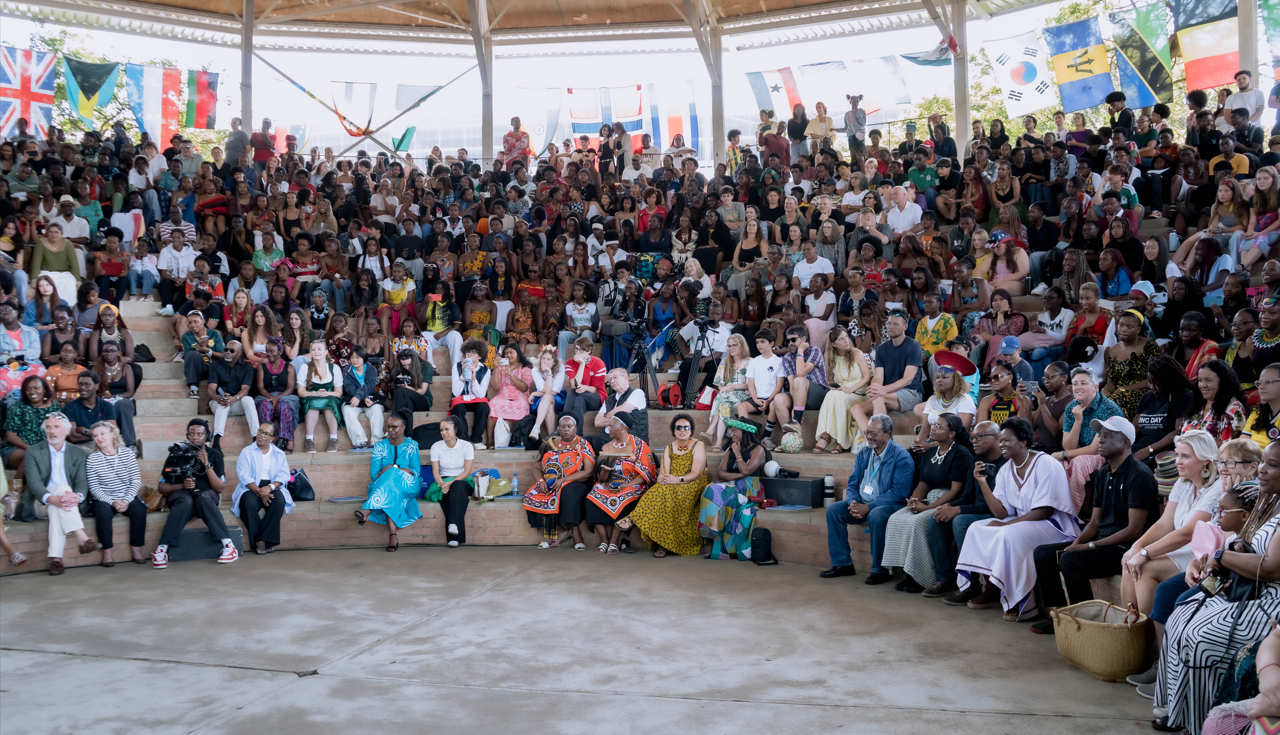
The Community Activities Service (CAS) program at Waterford Kamhlaba UWCSA brings together community service, creative arts, sports and events to create vibrant opportunities to live the UWC mission every day. CAS affords all Waterford Kamhlaba students, from Form 1 – IB2, transformative opportunities for personal growth and development, while getting to know, collaborate and exchange with diverse people and communities in Waterford and the greater in the Kingdom of Eswatini. Learn more
We aim to produce leaders who will make a positive impact on the world.
Our Mission & Values
- Mission Statement
- Our Values
Waterford Kamhlaba UWCSA strives to lay the foundations for its students to become responsible citizens who have the skills, knowledge and sense of purpose to provide leadership in both Africa and the world.
We passionately believe that all young people must be given access to an education of the highest standard to enable them to realise their potential. Waterford Kamhlaba UWCSA is proud to deliver that opportunity to disadvantaged yet talented African students through its Scholarship Programme.
Waterford highly values its socio-economic and cultural diversity. In 1967, His Majesty King Sobhuza II, Ingwenyama of eSwatini, granted Waterford the title “Kamhlaba”, eloquently describing Waterford’s culturally rich and diverse community:
"We are all of the earth, which does not see differences of colour, religion or race. We are ‘Kamhlaba’
all of one world.”
Latest News
Michael Stern Lecture 2026 – Rev. Nontombi Naomi Tutu
byuwcweb
March 20, 2026
PEACE IS ABOUT THE SAFETY OF PEOPLE – REV. TUTU Reverend Nontombi Naomi Tutu, who will deliver the annual Michael...
Our Latest Newsletter
byuwcweb
March 17, 2026
Our Latest Newsletter This edition of our newsletter brings you a clear view of our latest updates, milestones, and stories...
Upcoming Events
Impact stories
Lamulela Magagula
JUDO CHAMPION RAISES ESWATINI FLAG
Lamulela Magagula
JUDO CHAMPION RAISES ESWATINI FLAG
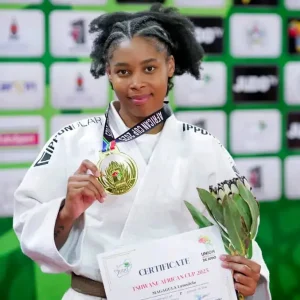
Waterford Kamhlaba UWC graduate and judo champion Lamulela Magagula once again lifted the Eswatini flag high when she defended her Gold Medal during the Pretoria African Cup 2025 in South Africa from 28 to 29 June.
She was the only athlete representing Eswatini in the tournament.
She won the same medal in the African Cup Judo Championships 2024 in Abidjan, Côte d'Ivoire which earned her the title of number one on the continent in her weight class.
“I am grateful that I have successfully defended my title and have once again secured a continental gold medal for the country. I fought against a very tough opponent in the final (SA rising star), with only my coach to guide me,” says Lumulela, who graduated at Waterford Kamhlaba UWC in 2024.
“The Swazi flag was raised the highest during the awards ceremony whilst the national anthem was played in recognition of the country's achievement. I am very grateful and will continue to push and work hard to put Eswatini in the map.”
After winning the gold medal at the Pretoria African Cup 2025 where she was accompanied by her coach, Lamulela says this was an assurance that she is a champion.
“Having won the African cup gold medal for a second time confirmed that my first victory was not a fluke. I felt proud to represent my country on yet another global stage, especially after one of the hardest matches against a well-known South African Black belt,” she proudly says.
The achievement also boosted her rankings from 46th to 27th in the world.
Lamulela is currently living in the United States and studying at Lake Forest College. She has also found a High-Performance training centre in Chicago, with 7th Dan Black belt as head coach.
“I plan to continue training as I intend to participate in the 2028 LA Olympic Games. I have also received an Olympic Scholarship that will fund my training while I am living in the US,” she says.
She is also currently preparing for the Commonwealth Games 2026 that will be held in Glasgow, Scotland.
To the youth that aspires to play judo or any sport, the champion advises that they should not take the smallest training, practices or work within sports for granted.
She is opposed to the feeling by Swazis that they cannot be champions due to lack of facilities.
“During covid, I used to tie a belt around a pillar and practice uchi komi's (repetition techniques) due to lack of having a partner. Straight after covid, I attended the Gauteng Open and won silver in seniors and gold in my junior category which essentially opened doors for me to train in high performance,” she says.
She highlights discipline as another key factor that can go a long way in doing little things.
“I advise youngsters not to focus on what they do not have, but rather on how to maximize on what is available to them. Along with having a good support structure, despite judgments (I was also told that judo isn't for girls), continue to aspire towards your goal.”
Lamulela debuted in Angola in 2024 where she finished fourth.
Earlier in the year, she competed in a regional judo tournament held at Wits University in Johannesburg, South Africa where she competed against other athletes from Botswana, Mozambique, South Africa, and Zimbabwe.
Lamulela’s love for judo started unexpectedly at Brilliant Stars Preschool in Mbabane, where a coach gave a demonstration to spark interest in the sport. The journey has triumphed to a level where she now represents Eswatini on the African judo stage.
She started training as a hobby at the Mbabane Theatre Club twice a week after school.
While at Sifundzani Primary School, she participated in regional competitions in South Africa, earning medals and gaining exposure.
Over the years, she competed and trained in countries such as Botswana, Mauritius, and even Ireland, where she attended a training camp sponsored by Eswatini’s Sports Council.
She was the only athlete representing Eswatini in the tournament.
She won the same medal in the African Cup Judo Championships 2024 in Abidjan, Côte d'Ivoire which earned her the title of number one on the continent in her weight class.
“I am grateful that I have successfully defended my title and have once again secured a continental gold medal for the country. I fought against a very tough opponent in the final (SA rising star), with only my coach to guide me,” says Lumulela, who graduated at Waterford Kamhlaba UWC in 2024.
“The Swazi flag was raised the highest during the awards ceremony whilst the national anthem was played in recognition of the country's achievement. I am very grateful and will continue to push and work hard to put Eswatini in the map.”
After winning the gold medal at the Pretoria African Cup 2025 where she was accompanied by her coach, Lamulela says this was an assurance that she is a champion.
“Having won the African cup gold medal for a second time confirmed that my first victory was not a fluke. I felt proud to represent my country on yet another global stage, especially after one of the hardest matches against a well-known South African Black belt,” she proudly says.
The achievement also boosted her rankings from 46th to 27th in the world.
Lamulela is currently living in the United States and studying at Lake Forest College. She has also found a High-Performance training centre in Chicago, with 7th Dan Black belt as head coach.
“I plan to continue training as I intend to participate in the 2028 LA Olympic Games. I have also received an Olympic Scholarship that will fund my training while I am living in the US,” she says.
She is also currently preparing for the Commonwealth Games 2026 that will be held in Glasgow, Scotland.
To the youth that aspires to play judo or any sport, the champion advises that they should not take the smallest training, practices or work within sports for granted.
She is opposed to the feeling by Swazis that they cannot be champions due to lack of facilities.
“During covid, I used to tie a belt around a pillar and practice uchi komi's (repetition techniques) due to lack of having a partner. Straight after covid, I attended the Gauteng Open and won silver in seniors and gold in my junior category which essentially opened doors for me to train in high performance,” she says.
She highlights discipline as another key factor that can go a long way in doing little things.
“I advise youngsters not to focus on what they do not have, but rather on how to maximize on what is available to them. Along with having a good support structure, despite judgments (I was also told that judo isn't for girls), continue to aspire towards your goal.”
Lamulela debuted in Angola in 2024 where she finished fourth.
Earlier in the year, she competed in a regional judo tournament held at Wits University in Johannesburg, South Africa where she competed against other athletes from Botswana, Mozambique, South Africa, and Zimbabwe.
Lamulela’s love for judo started unexpectedly at Brilliant Stars Preschool in Mbabane, where a coach gave a demonstration to spark interest in the sport. The journey has triumphed to a level where she now represents Eswatini on the African judo stage.
She started training as a hobby at the Mbabane Theatre Club twice a week after school.
While at Sifundzani Primary School, she participated in regional competitions in South Africa, earning medals and gaining exposure.
Over the years, she competed and trained in countries such as Botswana, Mauritius, and even Ireland, where she attended a training camp sponsored by Eswatini’s Sports Council.
Conrad Hughes
CONRAD HUGHES SHAPES CURRICULUM
Conrad Hughes
CONRAD HUGHES SHAPES CURRICULUM
Waterford Kamhlaba UWCSA alumni Conrad Hughes has produced his latest book titled “Changing Assessment: How to Design Curriculum for Human Flourishing”.
It has been published by Brill with UNESCO.
The book offers a blueprint for change.
Hughes shows how education systems can be transformed to value diverse intelligences and align closely with the needs of learners, society, and the future of work.
In the book, Hughes says traditional exams were a problem because they narrowly focus on academic knowledge, overlooking crucial skills like creativity, collaboration, and critical thinking. This system often disadvantages students and stifles genuine learning.
He further highlights that current models were deeply rooted in rigid IQ testing and the concept of "normal distribution," creating an elitist, one-size-fits-all approach that does not reflect diverse human potential.
Hughes says COVID-19 exposed the fragility of traditional assessments, yet most systems reverted to old ways, missing a golden opportunity for meaningful reform.
“University admissions continue to reinforce narrow academic standards, hindering broader assessment recognition,” he says.
Hughes reveals that Vocational Education and Training (VET) systems, especially in countries like Switzerland and Germany, offer a robust alternative, preparing students with practical, in-demand skills and strong employment prospects. “This is a key area for expansion.”
He says there was a need for a competence-based model, uniting knowledge, skills, and attitudes, to prepare students for an unpredictable future.
He says the UNESCO IBE's seven global competences offer a powerful framework for this transformation. It calls for a global shift towards curriculum models that value doing, being, and becoming — not just knowing.
Hughes notes that the work environment was rapidly evolving, demanding skills like problem-solving, teamwork, and adaptability.
“Workplace assessment tools, such as personality tests and continuous feedback, provide valuable blueprints for schools to foster these critical competencies,” he says.
He has authored and co-authored several publications on prejudice reduction, creativity, assessment, competence-based learning and international-mindedness in education.
An expert in education and training policy Joao Santos describes the book; “It is a powerful call to rethink how we assess learning. This book (UNESCO IBE, 2025) exposes the deep flaws in 19th-century, high-stakes testing and presents a holistic roadmap to design curriculum and assessment for human flourishing. A must-read for educators, policymakers, and anyone working in skills development and VET.”
Hughes, who is fluent in English and French, is the Head of School of the Lycée International de Los Angeles where he oversees the strategic vision, academic excellence, and operational efficiency of the organisation. With over 18 years of experience in educational leadership, he has a passion for fostering transformative learning, intercultural understanding, and global citizenship among students and staff.
He holds an EdD in Critical Thinking from Durham University (UK) where he is a Professor in Practice, a PhD in English Literature from the University of the Witwatersrand (South Africa), and a Life Coach certification from Erickson Coaching International. He is also a Senior Fellow at IBE-UNESCO, where he contributes to the development of research-based and innovative curricula for the 21st century. His skills include comparative education, tutoring, educational leadership, and solution-based coaching.
His mission is to empower learners to become agents of positive change in their communities and beyond.
Meanwhile, Hughes recently visited The Getty Villa which compares museums with educational design.
“Too often our curricula are jam-packed with knowledge, sequenced in such a manner that the experience of incorporating all that information is neither ergonomic nor particularly enjoyable. It’s a kind of conveyor belt of transmission, forcing learning off by heart in a concentrated setting, ending with the brutal episode of very high-stakes and narrow assessments which are equally compressed. It's a bit like an overfilled museum.”
He says Getty’s Villa, on the other hand, contained two extremely powerful lessons that are a model to be venerated for the curation of art and, by analogy, the creation of curriculum design: curatorial aestheticism (a cogently designed curriculum is a beautifully told story, not some packaged industrial "unit" or a "scheme") and the artful bringing to life of knowledge.
“Powerful teaching is not about a dry utilitarian transmission of facts but a reawakening of the context, intrigue, passion and innovation that lies behind the knowledge.”
The Getty Villa is an educational centre and an art museum located at the easterly end of the Malibu coast in the Pacific Palisades neighbourhood of Los Angeles, California, United States.
It has been published by Brill with UNESCO.
The book offers a blueprint for change.
Hughes shows how education systems can be transformed to value diverse intelligences and align closely with the needs of learners, society, and the future of work.
In the book, Hughes says traditional exams were a problem because they narrowly focus on academic knowledge, overlooking crucial skills like creativity, collaboration, and critical thinking. This system often disadvantages students and stifles genuine learning.
He further highlights that current models were deeply rooted in rigid IQ testing and the concept of "normal distribution," creating an elitist, one-size-fits-all approach that does not reflect diverse human potential.
Hughes says COVID-19 exposed the fragility of traditional assessments, yet most systems reverted to old ways, missing a golden opportunity for meaningful reform.
“University admissions continue to reinforce narrow academic standards, hindering broader assessment recognition,” he says.
Hughes reveals that Vocational Education and Training (VET) systems, especially in countries like Switzerland and Germany, offer a robust alternative, preparing students with practical, in-demand skills and strong employment prospects. “This is a key area for expansion.”
He says there was a need for a competence-based model, uniting knowledge, skills, and attitudes, to prepare students for an unpredictable future.
He says the UNESCO IBE's seven global competences offer a powerful framework for this transformation. It calls for a global shift towards curriculum models that value doing, being, and becoming — not just knowing.
Hughes notes that the work environment was rapidly evolving, demanding skills like problem-solving, teamwork, and adaptability.
“Workplace assessment tools, such as personality tests and continuous feedback, provide valuable blueprints for schools to foster these critical competencies,” he says.
He has authored and co-authored several publications on prejudice reduction, creativity, assessment, competence-based learning and international-mindedness in education.
An expert in education and training policy Joao Santos describes the book; “It is a powerful call to rethink how we assess learning. This book (UNESCO IBE, 2025) exposes the deep flaws in 19th-century, high-stakes testing and presents a holistic roadmap to design curriculum and assessment for human flourishing. A must-read for educators, policymakers, and anyone working in skills development and VET.”
Hughes, who is fluent in English and French, is the Head of School of the Lycée International de Los Angeles where he oversees the strategic vision, academic excellence, and operational efficiency of the organisation. With over 18 years of experience in educational leadership, he has a passion for fostering transformative learning, intercultural understanding, and global citizenship among students and staff.
He holds an EdD in Critical Thinking from Durham University (UK) where he is a Professor in Practice, a PhD in English Literature from the University of the Witwatersrand (South Africa), and a Life Coach certification from Erickson Coaching International. He is also a Senior Fellow at IBE-UNESCO, where he contributes to the development of research-based and innovative curricula for the 21st century. His skills include comparative education, tutoring, educational leadership, and solution-based coaching.
His mission is to empower learners to become agents of positive change in their communities and beyond.
Meanwhile, Hughes recently visited The Getty Villa which compares museums with educational design.
“Too often our curricula are jam-packed with knowledge, sequenced in such a manner that the experience of incorporating all that information is neither ergonomic nor particularly enjoyable. It’s a kind of conveyor belt of transmission, forcing learning off by heart in a concentrated setting, ending with the brutal episode of very high-stakes and narrow assessments which are equally compressed. It's a bit like an overfilled museum.”
He says Getty’s Villa, on the other hand, contained two extremely powerful lessons that are a model to be venerated for the curation of art and, by analogy, the creation of curriculum design: curatorial aestheticism (a cogently designed curriculum is a beautifully told story, not some packaged industrial "unit" or a "scheme") and the artful bringing to life of knowledge.
“Powerful teaching is not about a dry utilitarian transmission of facts but a reawakening of the context, intrigue, passion and innovation that lies behind the knowledge.”
The Getty Villa is an educational centre and an art museum located at the easterly end of the Malibu coast in the Pacific Palisades neighbourhood of Los Angeles, California, United States.
Luyanda Mndzebele
PASSIONATE ABOUT ECONOMIC DEVELOPMENT
Luyanda Mndzebele
PASSIONATE ABOUT ECONOMIC DEVELOPMENT
Born and raised in Eswatini, Luyanda Mndzebele is a bright, committed young leader with a deep passion for economic and sustainable development.
She completed her International Baccalaureate (IB) diploma at Waterford Kamhlaba in November 2024 and is currently pursuing Economics abroad.
Luyanda serves as Chairperson of the UNICEF Youth Advisory Board in Eswatini, working with a team of 11 young leaders to advocate for meaningful youth inclusion, improved education and solutions to challenges affecting vulnerable youth and children. She is also an active climate advocate and a member of the Oxford Climate Society, the Max Thabiso Edkins Climate Ambassador Program and the FXB Climate Ambassador Program.
One of Eswatini’s newest Global Partnership for Education (GPE) Youth Leaders, Luyanda represented the organisation at the highest platform — the United Nations General Assembly (UNGA 80) in September 2025. Beyond her advocacy work, she enjoys gardening, knitting and youth empowerment.
In 2021, she was selected for the inaugural regiment of Rise Fellows, a program supporting exceptional teenagers aged 15–17 in their service to the world. Her Rise project focused on empowering rural farmers through organic and sustainable agricultural practices. She developed an organic plant booster for her home garden and promoted backyard gardening and water harvesting in her community at the height of the Covid-19 pandemic.
“For me, opportunity met preparedness in my journey to UNGA. Through my work in climate change, including serving as a remote coordinator for Blue Scarfs, which began as a UNICEF Youth Leadership group with participants from over 55 countries trained for six months on ‘Leadership as a Practice’, I found my footing and began making a meaningful impact,” she said.
“I have also interned and volunteered with grassroots organisations such as PELUM Eswatini, where I worked in their urban garden in Ezulwini, and COSPE Eswatini, where I supported rural communities adapting to climate change through training, workshops and community visits between 2022 and 2023.”
She added: “A few months after completing my IB and graduating from the MTE Climate Ambassador Program, the outreach officer nominated me as a Youth Leader for the GPE. This was based on the work I had shared on LinkedIn and how I have grown as a climate change youth advocate. I accepted the nomination, participated in a selection call and was later chosen as a youth leader.”
In June this year, GPE invited Luyanda to represent the organisation at UNGA. She gratefully accepted the opportunity, describing it as an honour to share her perspectives as a youth leader combining her experience in education advocacy (UNICEF) and climate action (volunteering and online programs) on the global stage.
Luyanda said UNGA was an eye-opener, particularly as she witnessed the growing frustration among young people who feel that the United Nations is losing its ability to address global crisis, including conflict and inequality.
“There is a real need for the UN to continue involving the youth. It is encouraging that the UN now has a Youth Office facilitating its participation in decision-making, which is a significant step forward,” she said.
While at UNGA, she found herself in the same room with presidents, heads of state and, at one point, UN Secretary-General António Guterres and Deputy Secretary-General Amina Mohammed.
Luyanda advises young people to seek strong mentorship, surround themselves with supportive friends, embrace discomfort and remain resilient.
“There will always be people who misunderstand your journey or think you are ‘too much’ of this or that. Self-awareness is essential. Be open-minded, willing to learn and unlearn — and be rebellious with your dreams,” she concluded.
She completed her International Baccalaureate (IB) diploma at Waterford Kamhlaba in November 2024 and is currently pursuing Economics abroad.
Luyanda serves as Chairperson of the UNICEF Youth Advisory Board in Eswatini, working with a team of 11 young leaders to advocate for meaningful youth inclusion, improved education and solutions to challenges affecting vulnerable youth and children. She is also an active climate advocate and a member of the Oxford Climate Society, the Max Thabiso Edkins Climate Ambassador Program and the FXB Climate Ambassador Program.
One of Eswatini’s newest Global Partnership for Education (GPE) Youth Leaders, Luyanda represented the organisation at the highest platform — the United Nations General Assembly (UNGA 80) in September 2025. Beyond her advocacy work, she enjoys gardening, knitting and youth empowerment.
In 2021, she was selected for the inaugural regiment of Rise Fellows, a program supporting exceptional teenagers aged 15–17 in their service to the world. Her Rise project focused on empowering rural farmers through organic and sustainable agricultural practices. She developed an organic plant booster for her home garden and promoted backyard gardening and water harvesting in her community at the height of the Covid-19 pandemic.
“For me, opportunity met preparedness in my journey to UNGA. Through my work in climate change, including serving as a remote coordinator for Blue Scarfs, which began as a UNICEF Youth Leadership group with participants from over 55 countries trained for six months on ‘Leadership as a Practice’, I found my footing and began making a meaningful impact,” she said.
“I have also interned and volunteered with grassroots organisations such as PELUM Eswatini, where I worked in their urban garden in Ezulwini, and COSPE Eswatini, where I supported rural communities adapting to climate change through training, workshops and community visits between 2022 and 2023.”
She added: “A few months after completing my IB and graduating from the MTE Climate Ambassador Program, the outreach officer nominated me as a Youth Leader for the GPE. This was based on the work I had shared on LinkedIn and how I have grown as a climate change youth advocate. I accepted the nomination, participated in a selection call and was later chosen as a youth leader.”
In June this year, GPE invited Luyanda to represent the organisation at UNGA. She gratefully accepted the opportunity, describing it as an honour to share her perspectives as a youth leader combining her experience in education advocacy (UNICEF) and climate action (volunteering and online programs) on the global stage.
Luyanda said UNGA was an eye-opener, particularly as she witnessed the growing frustration among young people who feel that the United Nations is losing its ability to address global crisis, including conflict and inequality.
“There is a real need for the UN to continue involving the youth. It is encouraging that the UN now has a Youth Office facilitating its participation in decision-making, which is a significant step forward,” she said.
While at UNGA, she found herself in the same room with presidents, heads of state and, at one point, UN Secretary-General António Guterres and Deputy Secretary-General Amina Mohammed.
Luyanda advises young people to seek strong mentorship, surround themselves with supportive friends, embrace discomfort and remain resilient.
“There will always be people who misunderstand your journey or think you are ‘too much’ of this or that. Self-awareness is essential. Be open-minded, willing to learn and unlearn — and be rebellious with your dreams,” she concluded.
what’s new
Waterford Kamhlaba UWCSA
P O Box 52, Mbabane, H100, eSwatini
Waterford Park, Mbabane
USEFUL LINKS